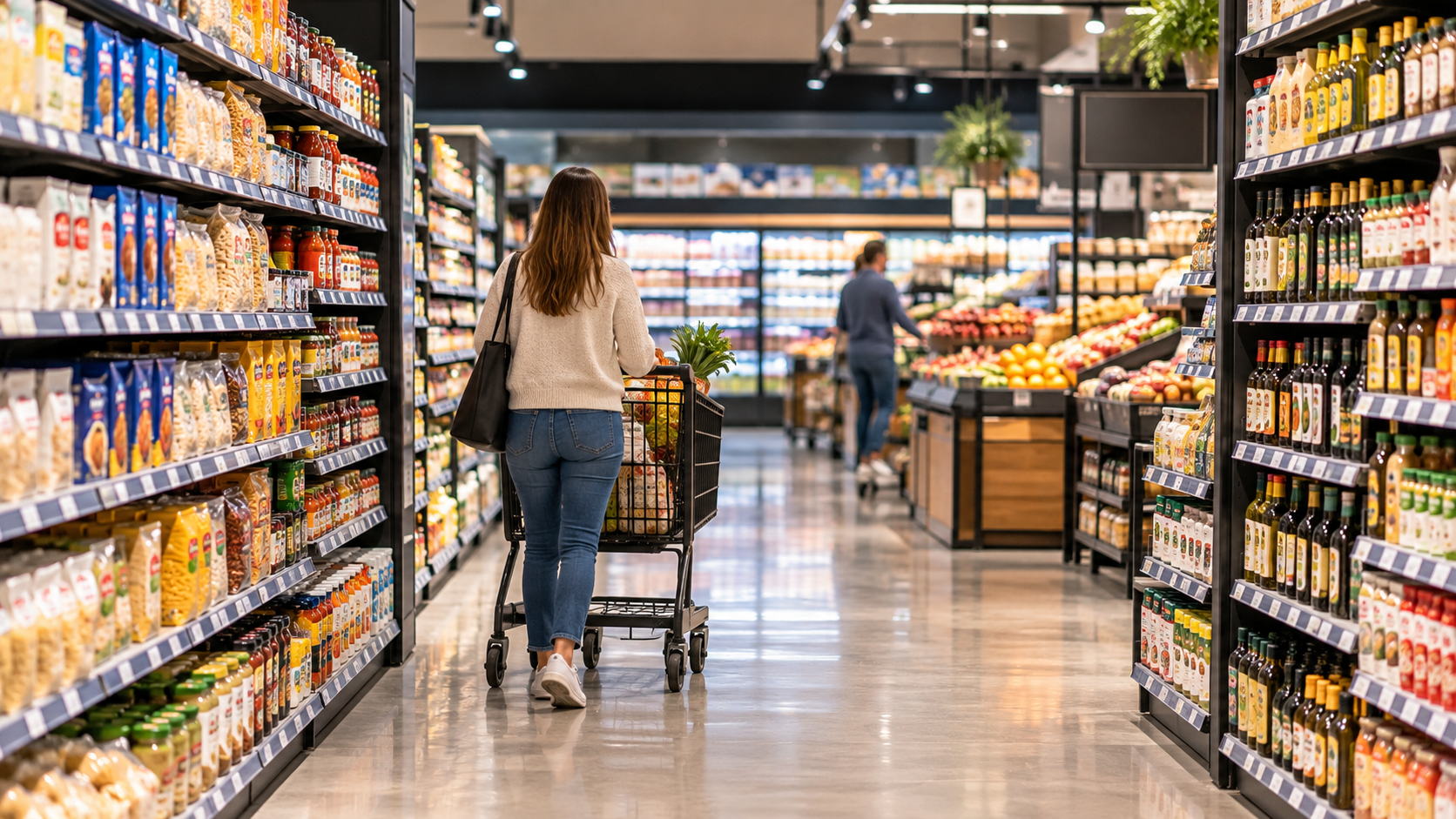
Walk into any American supermarket and you’ll see thousands of products competing for your attention. But have you ever wondered how supermarkets choose products for their shelves? Familiar brands sit alongside new discoveries, private-label alternatives, and specialty foods from around the world.
But have you ever wondered who decides which products deserve a place on those shelves?
The answer is more complicated than you might think.
Behind every jar of pasta sauce, bottle of olive oil, or package of snacks is a series of commercial decisions involving buyers, category managers, suppliers, and sometimes distributors.
Understanding how supermarkets choose products reveals a fascinating side of the food industry that most shoppers never see.
Who decides how supermarkets choose products?
In many grocery chains, the responsibility for selecting products falls to retail buyers and category managers.
A buyer evaluates potential suppliers, negotiates purchasing terms, and determines whether a product is commercially attractive.
A category manager looks at the bigger picture: how a product fits into an entire category, such as pasta, beverages, dairy, or snacks.
For example, a supermarket might already offer 25 different pasta sauces. Adding a new Italian brand isn’t simply a question of whether the sauce tastes good.
The retailer needs to consider whether customers will buy it, whether it offers something different, and whether it deserves space that could be used for another product.
The process also varies depending on the retailer. National chains may have centralized purchasing teams, while regional and independent supermarkets can operate differently.
Shelf space is valuable — and the numbers prove it
One of the biggest challenges for supermarkets is that shelf space is limited.
Every product occupies space that could potentially generate sales for the retailer.
And recent industry data shows why those decisions matter.
According to Circana’s 2025 report on U.S. grocery center-store productivity, a typical grocery shelf had become 7% less productive compared with 2022.
The report also highlights differences between categories, with some receiving additional space without corresponding improvements in sales performance.
This doesn’t mean supermarkets are simply selling 7% less. It means that the productivity of the space itself has declined.
For retailers, that creates pressure to evaluate how effectively products use the space available.
A beautiful package or an interesting story may attract attention, but ultimately, products also need to demonstrate commercial potential.
Source: Circana — 2024 Center Store Productivity Trends in the U.S. Grocery Channel
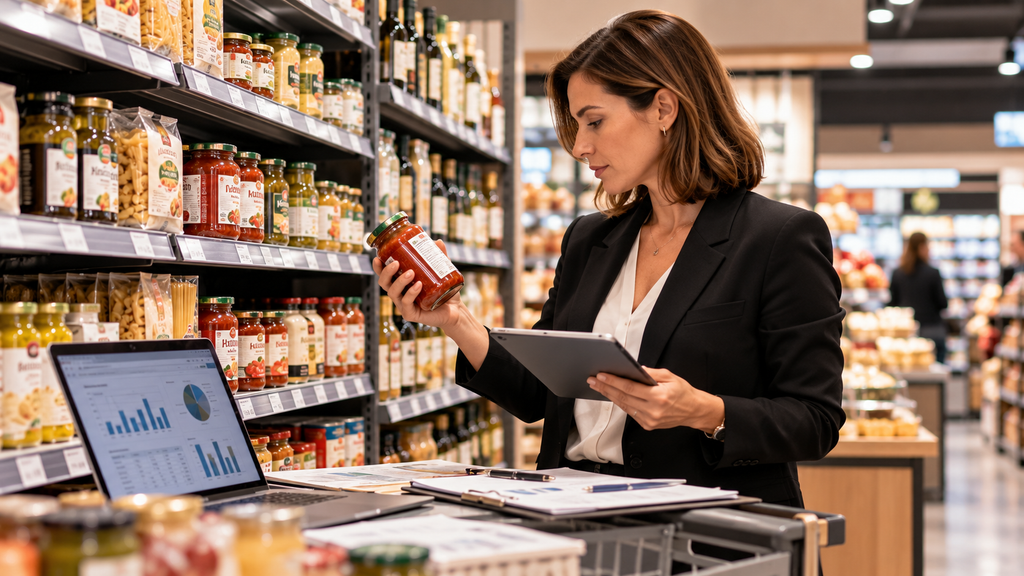
How supermarkets choose products: what really matters?
When retailers evaluate a new product, several considerations can influence their decision.
Consumer demand
Does the product meet an existing customer need? Is there evidence that shoppers are interested in the category or the type of product being offered?
Price and profitability
A retailer needs to understand the purchase price, expected selling price, and potential profitability.
Product differentiation
What makes this product different from competing brands? It might be its ingredients, origin, quality, convenience, or positioning.
Supply reliability
Can the supplier deliver consistently? An attractive product becomes a problem if it cannot be replenished when customers need it.
Packaging and shelf presentation
Packaging must communicate clearly to shoppers while meeting practical retail requirements.
Sales and marketing support
Retailers may also consider whether the supplier has a credible plan to generate awareness and encourage consumers to try the product.
These factors help explain why an excellent product doesn’t automatically receive a place on supermarket shelves.
Do brands have to pay to get on supermarket shelves?
Here’s something many consumers don’t know: in certain situations, suppliers may be asked to make payments associated with introducing products into retail stores.
These payments are commonly known as slotting allowances.
The U.S. Federal Trade Commission (FTC) has examined this practice in the grocery industry.
In a report published in 2003, the FTC described slotting allowances as payments suppliers make to certain retailers in connection with initial product placement or access to warehouse space.
The FTC’s research also found that these arrangements varied considerably across product categories and retailers.
Importantly, not every supermarket requires slotting fees, and the practice should not be confused with a universal requirement for entering the U.S. grocery market.
The FTC’s findings came from selected case studies rather than a representative survey of the entire industry, so they should not be interpreted as describing every retailer today.
Still, the practice reveals an important reality: getting a product onto a supermarket shelf can involve financial and commercial considerations that shoppers rarely see.
Source: Federal Trade Commission — Slotting Allowances in the Retail Grocery Industry
Why some great products never make it into supermarkets
Imagine two Italian olive oil producers approaching an American grocery chain.
The first offers an exceptional extra virgin olive oil with beautiful packaging and a compelling family history.
The second offers a similarly high-quality product but also provides detailed pricing, a clear distribution plan, reliable supply arrangements, and evidence of demand in the target market.
Which one is more likely to attract the buyer’s attention?
There is no guaranteed outcome, but the second producer may be better prepared to answer the retailer’s commercial questions.
This hypothetical example illustrates a fundamental distinction between having a great product and being ready for retail distribution.
Quality matters, but so do market positioning, logistics, pricing, and the ability to demonstrate value.
For international producers, understanding these expectations before approaching potential buyers can make a meaningful difference.
Getting onto the shelf is only the beginning
Securing an initial listing is an important milestone, but it doesn’t guarantee long-term success.
Once a product reaches stores, retailers can evaluate its performance through sales, customer response, and its contribution to the overall category.
If a new product doesn’t perform as expected, the retailer may reconsider how much space it receives or whether to continue carrying it.
That is why entering a supermarket should be viewed as the beginning of an ongoing commercial relationship rather than the final goal.
For suppliers, success depends not only on gaining distribution but also on building sustainable demand.
What this means for food producers entering the U.S. market
For international food producers, especially those looking to expand into the United States, understanding how supermarkets choose products is an essential part of market preparation.
For a broader perspective on the American food market, explore our article on B2B e-commerce trends in the United States.
Before approaching buyers, producers should be able to explain not only what makes their product special, but also why it makes commercial sense for a particular retailer.
The right market, the right positioning, and the right buyer can matter just as much as the product itself.
And for consumers, the next visit to a supermarket might look a little different.
Because behind every product on the shelf, there’s a decision — and behind that decision, there’s an entire business strategy.