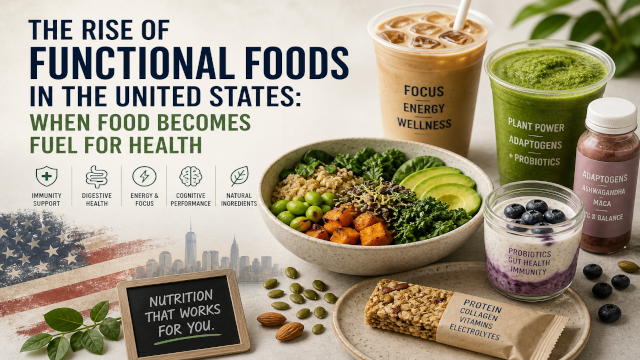
🥗The rise of functional foods in the United States: when food becomes fuel for health
In recent years, the American food landscape has been undergoing a quiet but powerful transformation. Beyond flavor and convenience, consumers are increasingly looking for something more from what they eat: functionality. This shift has given rise to the booming category of functional foods — products designed not only to nourish but also to actively support health and well-being.
What are functional foods?
Functional foods are ingredients or products that provide health benefits beyond basic nutrition. This can include foods enriched with vitamins, minerals, probiotics, or bioactive compounds that may support immunity, digestion, energy, or cognitive performance.
In the United States, this category has expanded rapidly, moving from niche health stores into mainstream supermarkets, coffee chains, and even fast-casual restaurants.
Why are they becoming so popular?
Several factors are driving this trend:
- Increased health awareness after the pandemic
- Growing interest in preventive nutrition
- The influence of fitness culture and biohacking communities
- Social media trends promoting “better-for-you” eating habits
Consumers are no longer just asking “Is this tasty?” — they are asking “What does this do for my body?”
Examples of functional foods in the U.S. market
Today’s American food scene is full of innovative examples:
- Protein-enhanced products: yogurt, pasta, and even coffee with added protein
- Probiotic-rich foods: kombucha, kefir, and fermented snacks
- Adaptogen-infused drinks: beverages containing ingredients like ashwagandha or maca
- Fortified snacks: energy bars with added vitamins, collagen, or electrolytes
Even major chains and supermarkets are adapting, launching product lines focused on wellness-driven consumers.

The role of coffee and fast casual brands
One of the most interesting developments is how functional ingredients are entering everyday habits. Coffee chains now offer drinks with added protein, MCT oil, or mushroom extracts, targeting consumers who want both energy and focus.
Fast-casual restaurants are also experimenting with menus designed around nutritional benefits rather than just indulgence.
Is this just a trend?
While some food trends come and go quickly, functional foods appear to be part of a deeper shift in consumer behavior. The blending of nutrition science, wellness culture, and food innovation suggests this category will continue to expand in the coming years.
Experts believe we are moving toward a future where food is increasingly personalized — designed to meet individual health needs rather than just general dietary guidelines.
Final thoughts
The rise of functional foods in the United States reflects a broader cultural change: food is no longer just about eating — it’s about performance, prevention, and lifestyle.
As innovation continues, the line between nutrition and wellness will only become more blurred, reshaping how Americans think about what’s on their plate.