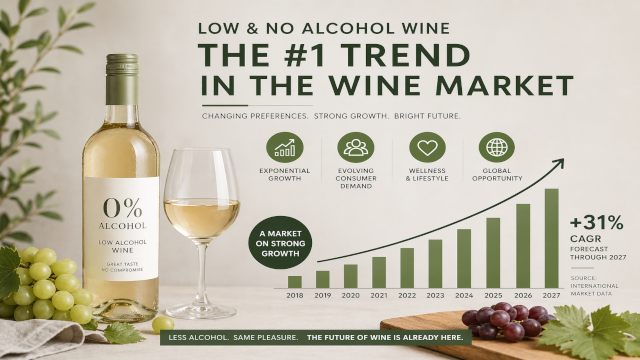
Alcohol-Free Italian wine is no longer a niche: what Vinitaly 2026 really signals
For years, alcohol-free Italian wine was treated as an experiment. A shelf curiosity. A compromise for those who “couldn’t” drink.
Then came Vinitaly 2026 – and the No/Low alcohol segment stopped asking for space. It started taking it.
Alcohol-free Italian wine: from niche to industrial category
The real news isn’t that dealcoholized wines exist. They’ve been around for a while.
The real shift is how they are being presented today.
At Vinitaly, NoLo is no longer tucked into experimental corners:
- it has a structured, recognizable exhibition area
- it’s embedded in the official fair journey
- it’s supported by dedicated masterclasses and tastings
In other words: it has been institutionalized.
And when something enters the official perimeter of a fair like Vinitaly, it stops being a trend. It becomes a market.
A fully developed value chain (finally)
The second, more important signal is the maturity of the ecosystem.
This is no longer just about a final product. It’s about a full value chain:
- increasingly advanced dealcoholization technologies
- producers designing wines with low/no alcohol versions in mind
- distribution and retail beginning to build dedicated categories
- consumption shifting from “alternative” to “intentional choice”
That shift matters. NoLo is no longer an adaptation of traditional wine – it’s a designed category.
A cultural shift before a product shift
The real transformation isn’t technical. It’s cultural.
Consumption patterns are changing:
- stronger focus on wellness
- new drinking occasions (work, daytime, sports, lighter social settings)
- younger generations less attached to traditional alcohol consumption
In this context, wine risked losing relevance in several occasions.
NoLo brings those occasions back.
It doesn’t replace traditional wine. It expands the playing field.
Alcohol-free Italian wine: from contradiction to strategy
For a long time, “alcohol-free wine” sounded like a contradiction.
Today, it’s a competitive lever.
Why?
- it opens new markets (both geographic and cultural)
- lowers entry barriers for new consumers
- creates additional consumption moments
- allows brands to cover more occasions throughout the day
Most importantly: it enables Italian wine to compete where it previously couldn’t.
The risk of being late
There is, however, a critical point.
Other countries – less constrained by tradition and appellation systems—are moving faster in NoLo.
Italy holds a massive advantage in quality, brand, and perception.
But it risks being slower to adapt.
And in emerging categories, speed matters as much as reputation.
This is not just product innovation
Reducing NoLo to “a new type of wine” misses the point.
It is better understood as:
- portfolio innovation
- brand extension strategy
- a response to structural demand shifts
Treat it as a side project, and you’ll likely miss the opportunity.
Integrate it into your strategy, and you may redefine your positioning.
The future of alcohol-free Italian wine
Vinitaly 2026 sends a clear signal:
Italian wine has started competing – even without alcohol.
And this doesn’t mean losing identity.
It means doing what strong industries always do in times of transition:
expanding the playing field instead of defending only what already exists.