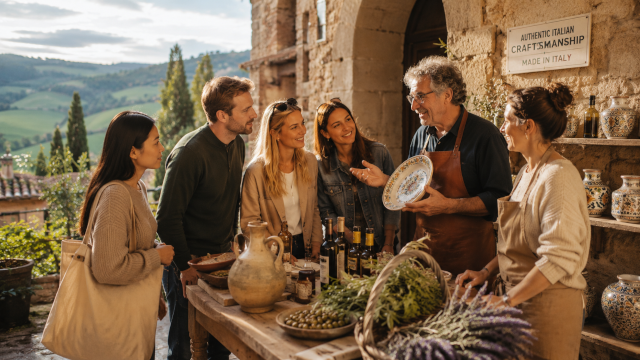
Artiturismo in Italy is opening a new way to discover the country through its artisans, craftsmanship, and authentic local experiences.
Italy has always attracted travelers with its art, food, and history. But a new kind of tourism is quietly emerging across the country, one that goes beyond museums, luxury hotels, and crowded landmarks.
It’s called Artiturismo.
While the term is still emerging, the concept reflects a growing desire to experience Italy through the people, skills, and traditions behind its products.
The word combines artigianato (craftsmanship) and tourism, describing a growing travel trend where visitors experience Italy through its traditional crafts, local producers, and artisanal excellence rather than through conventional sightseeing.
Instead of simply buying souvenirs, travelers want to meet the people who create them.
They want to learn.
They want to participate.
And most importantly, they want authenticity.
More than just an experience
Hands-on experiences in Italy are not new. Cooking classes, wine tastings, and artisan workshops have existed for decades.
What is changing today is the role these experiences play in travel itself.
For many modern travelers, artisanal experiences are no longer secondary activities added to a trip. They are becoming the main reason people choose a destination.
Travel is shifting from passive consumption to active participation.
People no longer want only to see Italy, they want to understand how Italy is made.
This cultural shift is one of the reasons why Artiturismo is gaining attention, especially among travelers searching for slower, more meaningful, and more authentic experiences.
What is Artiturismo in Italy?
Artiturismo is a form of experiential travel centered around Italian craftsmanship, local production, and handmade traditions.
Travelers visit workshops, laboratories, vineyards, olive mills, dairies, family-owned businesses, and artisan studios to discover how iconic Italian products are actually made.
In many cases, they can also participate in the process themselves.
These experiences may include:
- pottery workshops in Umbria
- leather crafting in Florence
- glassmaking in Murano
- violin making in Cremona
- textile weaving in Sardinia
- mosaic art in Ravenna
- handmade pasta making in Emilia-Romagna
- olive oil tastings in Tuscany
- visits to cheese producers and wineries throughout Italy
Unlike traditional tourism, the focus is not only on seeing Italy, but on understanding the skills, traditions, and people behind it.
Why travelers are looking for authenticity
After years of mass tourism and fast-paced travel, many people are searching for slower and more meaningful experiences.
Today’s travelers increasingly value:
- local connections
- sustainability
- handmade products
- cultural immersion
- transparency
- unique memories over luxury consumption
According to recent travel trends, experiential tourism continues to grow as travelers increasingly prioritize local culture, authentic interactions, and hands-on activities over traditional sightseeing.
In a world dominated by algorithms and standardized travel experiences, craftsmanship feels personal and real.
A ceramic bowl carries more meaning when you’ve watched an artisan shape it by hand.
A bottle of olive oil becomes more valuable when you’ve walked through the olive grove and met the producer behind it.
People are increasingly interested not only in the product itself, but in the story behind it.
Interestingly, the same desire for authenticity that is reshaping tourism is also influencing the way international buyers discover Italian products and producers.
Italy’s greatest competitive advantage
Few countries have a stronger connection between identity and craftsmanship than Italy.
Across the country, thousands of small and medium-sized businesses continue traditions that have been passed down through generations.
In many Italian regions, craftsmanship is not a tourist attraction.
It is simply everyday life.
Whether it’s a family-owned winery, a truffle producer, a cheesemaker, a textile workshop, or a ceramics studio, these businesses preserve knowledge, techniques, and regional identities that make Italy unique.
This authenticity is precisely what many international travelers are seeking.
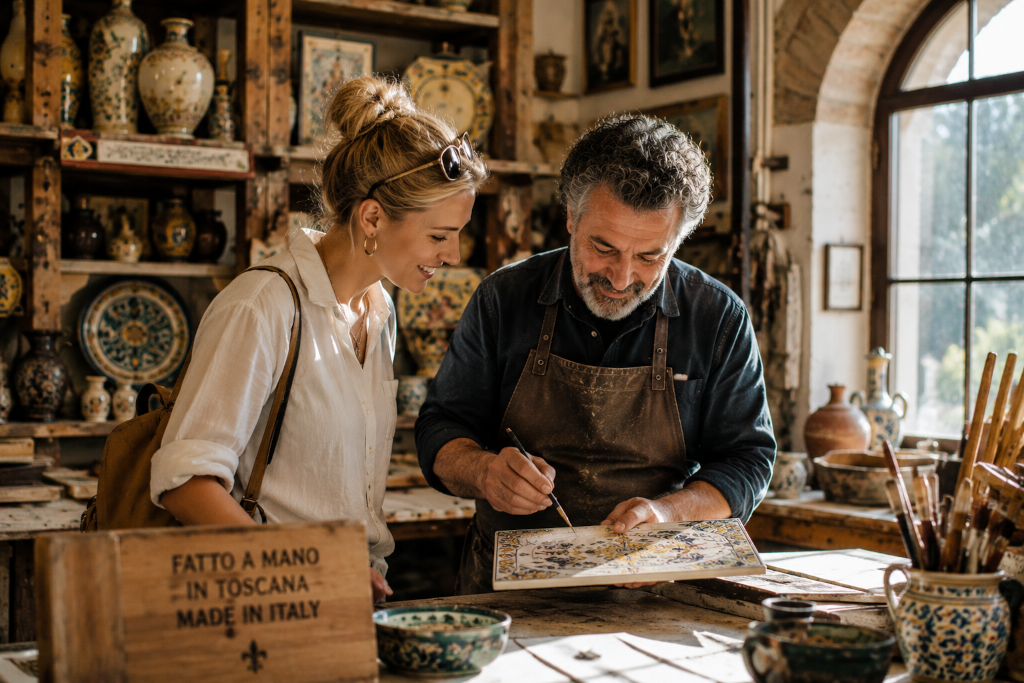
From tourism to global demand
Interestingly, the impact of Artiturismo doesn’t stop when travelers return home.
Many visitors who discover a product during a trip to Italy become long-term customers. Others introduce those products to restaurants, specialty stores, distributors, or hospitality businesses in their home countries.
The desire to know where products come from is no longer limited to tourism.
The same trend is influencing international trade.
Buyers today increasingly want to connect directly with producers, understand their stories, and source authentic products with a clear identity and origin.
This is a shift that Alysei sees every day.
As a platform connecting international buyers with Italian producers, Alysei helps create the same type of connection that travelers seek through Artiturismo: direct access to the people, traditions, and businesses behind Made in Italy excellence.
Whether someone discovers an artisan while traveling through Tuscany or searches for a premium Italian producer from abroad, the motivation is often the same: finding authenticity.
The future of Artiturismo in Italy – and Italian business
Artiturismo reflects a broader shift in the way people experience Italy.
Modern travelers are no longer satisfied with simply checking famous destinations off a list. They want:
- emotional experiences
- human connections
- stories worth remembering
- products with real origins
- skills worth learning
Italy, with its extraordinary network of artisans, food producers, and family businesses, is uniquely positioned to lead this movement.
And as the demand for authenticity continues to grow, the line between tourism and business becomes increasingly blurred.
Because sometimes the most valuable discovery isn’t a monument.
It’s the producer, artisan, or family business behind a product, and the relationships that continue long after the journey ends.