Food brand innovation: More products. More labels. More promises. But do consumers really want more choices?
Walk into almost any supermarket today, and the shelves tell the same story.
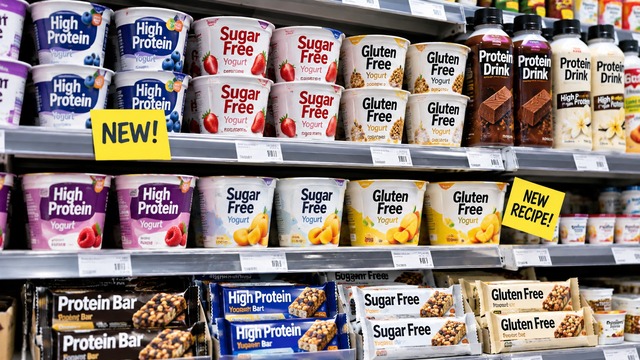
Gluten-free. Sugar-free. High-protein. Low-carb. Plant-based. Organic. Keto-friendly.
Dozens of yogurts, cereals, snacks and beverages, each promising something different.
But how different are they, really?
And more importantly, does the average consumer actually care?
Food manufacturers keep introducing new products and variations, while many shoppers simply want something familiar, affordable and good.
It raises an uncomfortable question: are food companies creating products consumers genuinely need, or just finding new ways to sell them something?
Too many products, too little attention
According to FMI – The Food Industry Association, the average American supermarket carried 33,248 different items in 2025.
That’s a remarkable number of products competing for shelf space and consumer attention.
Consider something as ordinary as yogurt.
Greek yogurt. High-protein yogurt. Zero-sugar yogurt. Lactose-free yogurt. Organic yogurt. And countless combinations of these characteristics.
Some offer meaningful benefits. Others are simply variations of products already available.
But consumers don’t have unlimited time or patience to compare every alternative.
They often choose what they know, what they like or what’s on promotion.
More choice doesn’t automatically mean more value.
When everything becomes a food trend
The food industry has become exceptionally good at turning nutritional characteristics into marketing opportunities.
Protein is everywhere. Sugar reduction is a selling point. Familiar foods are constantly reinvented around new dietary preferences.
Some innovations genuinely matter.
Gluten-free products are essential for people with celiac disease. Lactose-free alternatives address real needs. Reduced-sugar and protein-enriched foods can also benefit specific consumers.
But not every nutritional claim represents a breakthrough.
According to the International Food Information Council’s 2025 research, approximately one in three Americans reported increasing their protein intake over the previous year.
Yet around eight in ten were unsure of, or did not know, how much protein they should consume daily.
Consumers may be interested in protein without necessarily needing another protein-labeled snack.
A popular trend isn’t proof that every product built around it deserves a place on the shelf.
What really influences food purchases?
Despite endless innovation, consumers’ basic priorities remain remarkably consistent.
The 2025 IFIC Food & Health Survey identified the following important influences on food and beverage purchasing decisions among U.S. consumers:
| Purchasing factor | Consumers |
|---|---|
| Taste | 84% |
| Price | 71% |
| Healthfulness | 57% |
| Convenience | 52% |
| Environmental sustainability | 27% |
Taste comes first. Price follows.
That’s worth remembering when developing the next supposedly revolutionary food product.
A snack can be organic, high-protein and beautifully packaged. But if consumers don’t enjoy it or consider it too expensive, its nutritional claims may not be enough.
Sometimes, the most persuasive product feature isn’t printed in large letters on the packaging.
It’s simply great taste at a reasonable price.
The power of familiarity and promotions
Think about your own grocery shopping habits.
Do you carefully examine every new cereal, pasta sauce or yogurt?
Or do you reach for a familiar brand, perhaps switching when something comparable is on sale?
NielsenIQ’s Consumer Outlook: Guide to 2026 found that 52% of surveyed consumers buy only what they know they will use to avoid waste.
Another NielsenIQ report, published in 2026, found that 58% of surveyed consumers don’t particularly care whether a product is a national brand or private label. They buy what meets their needs.
This doesn’t mean consumers never try new products.
It means that familiarity, practicality and value can be more persuasive than novelty.
For manufacturers, the real challenge isn’t simply attracting attention.
It’s giving someone a compelling reason to change what they already buy.
Food brand innovation: real progress or just another variation?
Launching new products makes commercial sense. Manufacturers want to reach new customers, respond to competitors and secure valuable shelf space.
But there’s a difference between genuine innovation and simply creating another version of something that already exists.
A new package, a slightly modified recipe or an additional nutritional claim may make a product look different.
That doesn’t necessarily make it better. True food brand innovation should offer consumers a meaningful benefit, not simply another reason to compare nearly identical products.
Of course, consumers also enjoy discovery.
FMI’s 2025 U.S. Grocery Shopper Trends research found that 34% of shoppers preferred familiar dishes, 40% enjoyed familiar and new dishes equally, and 26% preferred exploring new dishes.
The figures concern cooking preferences rather than demand for new packaged brands, but they illustrate an important point: familiarity and curiosity coexist.
New products can succeed when they offer distinctive flavors, meaningful convenience, better value or solutions to unmet needs.
The question isn’t whether a product is new. It’s whether its difference actually matters.
One question every food producer should ask.
For food producers entering international markets, including Italian companies, this debate is particularly relevant.
Retailers already manage crowded assortments. Buyers need convincing reasons to introduce another product.
Understanding who decides what gets on a supermarket shelf is essential for manufacturers hoping to stand out in an increasingly competitive market.
Authentic ingredients, traditional recipes and attractive packaging may all be valuable.
But they aren’t always sufficient.
Before launching another product, manufacturers should ask:
Why would someone choose this instead of what’s already available?
If the answer is only a fashionable claim or a redesigned package, perhaps the product isn’t different enough.
Real differentiation begins with understanding consumers, not simply following competitors.
Conclusion: maybe we don’t need more food brands
The food industry doesn’t lack creativity. It produces an extraordinary number of new ideas, recipes and marketing concepts.
But more products don’t necessarily mean better choices.
Consumers still want food that tastes good, offers value and fits their everyday lives. They appreciate innovation when it makes a meaningful difference.
Perhaps the next big opportunity isn’t another high-protein snack or sugar-free variation.
Perhaps it’s understanding what people genuinely want before creating something new.
The food industry doesn’t have a shortage of products. It has a shortage of reasons to buy them.
Sources and further reading
- FMI – Food Industry Facts — Average U.S. supermarket assortment, 2025.
- IFIC – 2025 Food & Health Survey — Consumer purchasing priorities.
- IFIC – Americans’ Perceptions of Protein — Protein consumption and awareness.
- NielsenIQ – Consumer Outlook: Guide to 2026 — Shopping habits and waste avoidance.
- NielsenIQ – National Brands vs. Private Labels — Consumer brand preferences.
- FMI – U.S. Grocery Shopper Trends 2025 — Familiarity and food discovery.